
Corporate housekeeping: the daily cleanup of the fine print
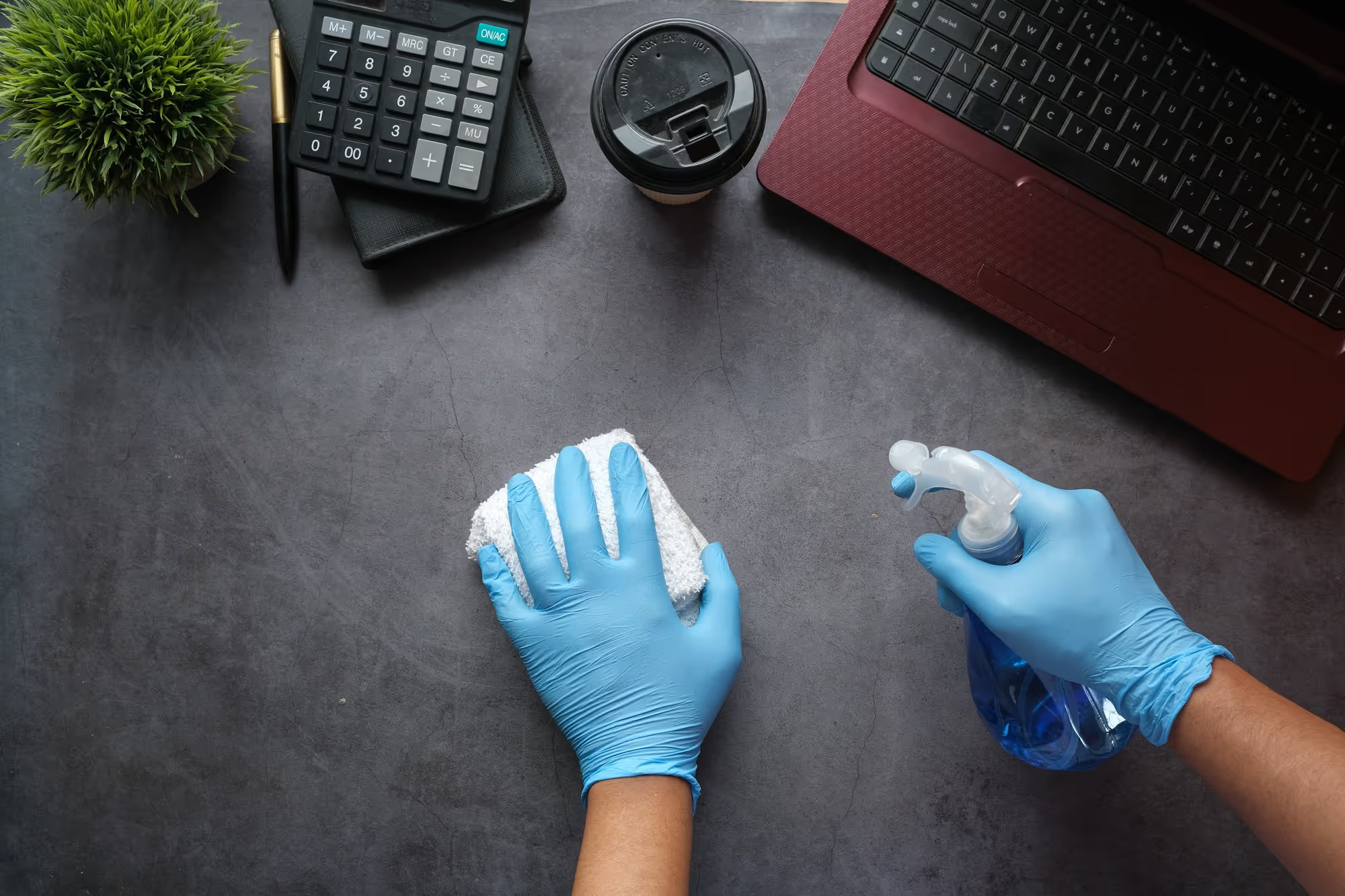
Nobody who wants to live in a beautiful, large house does so in order to clean it. You want to relax in the new bathroom and enjoy the garden. Dusting every little corner is something you would rather leave to someone else. Or you think: ‘Never mind, it will keep. The place is so big that you cannot see it right now.’ Until the dust builds up to the point where a deep clean is unavoidable. But instead of a small routine task, it is now a monster job. What does this story have to do with a company's legal department? Far more than you think.
Corporate legal records are vulnerable. Even so, there is plenty of room to improve how they are maintained. That is what Jan-Willem Prakke, founder of Legal Manager, saw. After his law degree he became an in-house lawyer and experienced the corporate household at close range. “My experience lay mainly in using technology and optimizing work processes. But those are not things lawyers generally deal with day to day. I thought: there is a lot to be gained there,” he explains. “Now we put every document into a software program, so that everything can always be found.”
The importance of corporate housekeeping
Storing and knowing your contracts, legal reports on privacy, or the articles of association you need in an acquisition: Prakke calls it corporate housekeeping. “It is not the most exciting side of the work. That is why it gets done with less enthusiasm, less precision and less efficiency. It is your hygiene, your routine tasks. Sloppiness in the records does not often go wrong, but when it does, the consequences are immediately serious.” It is like tidying and cleaning a house. If you do not do it regularly, you see nothing of it for a long time. But once the need arises, it is already a catastrophe.
With a standardized household, it matters that you know where you put everything, so you can find it again when you need it. “Say an important contract has gone missing, or certain documents are absent in an acquisition. We know of an example. A company with an entity in Spain was missing documents like that. A notary had to put all of it right as a matter of urgency. It cost 20,000 euros,” Prakke says. “In a transaction like that it may not sound like much, but for that amount Legal Manager can keep your records up to date for years and prevent costs of the same kind.”
A small daily clean, with everything put back in its place, prevents large problems. “Corporate housekeeping is above all about prevention,” Prakke says.” But surely a routine task like that can be solved without outside help? So what makes the difference? “Most companies have a lawyer do it. It is not enjoyable work, so that person finds other things to do. Or it is handed to an assistant. The thing is that this kind of work really does need legal knowledge, and it needs to happen consistently. Otherwise the important information ends up being entered less than optimally, as we often find.”
A partner in prevention
Despite the need for prevention, convincing someone of it is difficult. Because if nothing ever goes wrong, is that down to the preventive measures, or to the absence of the risk? That is why efficiency is an important consideration with routine tasks too. “Companies often compare the cost of outsourcing with solving it internally. But it turns out we do the work far more efficiently.” Alongside that, the client also learns to work with the software, and Legal Manager acts as an extension of the team. “We are a first-line help desk. Because we put it into new software, and you do not need important documents every day. In that case it helps to have people available who do this work daily.”
Corporate housekeeping is all about control. “Being in control is really a financial term, less so for legal. That was more about solving things once they went wrong. But that is shifting,” Prakke says. “Legal departments have to show that they are in control as well. The only question is how. Outsourcing to modern software is a good alternative to doing it yourself. Very large companies agree, and we work for several multinationals.” Because whether it is corporate housekeeping or the regular household, you would rather have someone else do it. "Why do we enjoy it? It is satisfying to get results. You see straight away that legal matters run more smoothly. That makes a client very happy,” concludes the man who has seen it from both sides.
When deeply buried documents are suddenly needed, every alarm bell goes off. Legal Manager turns that bell into a quiet chime that says: “Time to get to work.”
Want to avoid unpleasant surprises on the legal side? Then get in touch. Or click here.
Curious how to optimize more efficiency for your in-house legal team?
Ready to unburden your legal department? Schedule a call with us to receive free advice and insight into your business case. We look forward to hearing from you.


2316 ZL, Leiden
The Netherlands
COC: 73143367
