
"Modernization is first and foremost about adding value and making the best use of expertise"
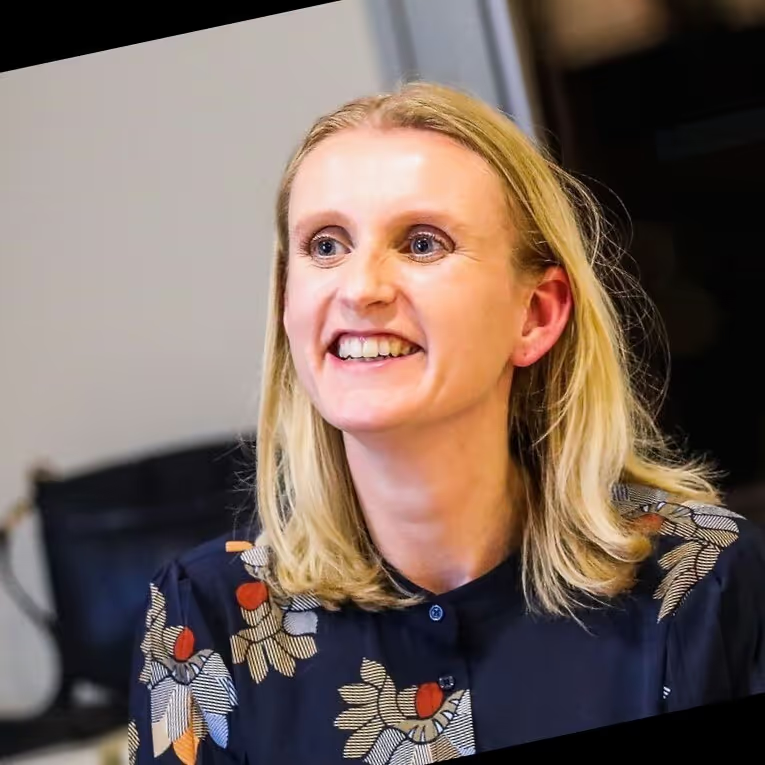
As an attorney at Linklaters and Rutgers & Posch, Miranda built up specialist knowledge of M&A, banking and debt capital markets, and (structured) finance. In 2017 she joined the listed firm Flow Traders, where she grew into the role of Global Head of Legal in a short space of time.
To start with, how have your earlier roles shaped you?
Broadly speaking, I have done very technical, substantive and precise work. Alongside that, I had to teach myself to think both analytically and structurally. Over the years I learned to think in terms of risk appetite and with a helicopter view. I also developed organizational and management skills, and learned to see where I can add value myself, where others can, and how to draw the same out of other people.
"So to modernize, you have to look critically at whether you are making the best use of expertise and whether you are adding value on the right components."
What exactly is your role at Legal Manager?
Mainly to translate what we do internally into what our client is asking for, and the other way around. So how do our specialists make the modernization of legal services possible? And from a company's perspective: why is this needed in the first place? How does it add value to our organization and make sure the in-house (senior) lawyers focus on the heavier substantive work and on strategy?
And what does modernization generally look like?
Modernization within the legal profession has several components. You can talk about technological innovation (for example the use of artificial intelligence), but also about making business processes more efficient. The first thing to look at is usually the work legal teams are doing right now. That typically includes a lot of standard legal work that is not really meant for a general counsel or a (senior) in-house lawyer. So to modernize, you have to look critically at whether you are making the best use of expertise and whether you are adding value on the right components. Put very plainly: who should actually be doing what?
What do legal departments typically run into?
General counsel often come from private practice, where carrying out standard legal work is no longer on their plate and many basic processes are set up and maintained for them. The moment they move into the commercial corporate sector, that work suddenly falls within their remit again. So where these people previously had clearly defined work, revolving mainly around legal substance and advice, they now also have to worry about filing documents, setting up those processes and keeping them up to date on a continuous basis. On top of that, general counsel often have neither the software nor the resources for bulk work, nor the knowledge to use that kind of software to its full potential. These are all things Legal Manager can do faster and better with its young, tech-savvy and efficient lawyers. What makes it even better is that the people working at Legal Manager actually find the work that a general counsel or in-house lawyer experiences as "standard" or "less substantive" very interesting, because they are still at the start of their careers.
''Legal Manager does not only do corporate housekeeping, it also contributes on the strategic side.''
Coming back to the translation you mentioned earlier: how do you try to connect internal and external processes?
At Legal Manager we want our specialists to understand where specific client needs come from. Why does the client want 300 contracts entered into new software? Where does the in-house lawyer spend a lot of time when it comes to bulk work, such as completing template resolutions, NDAs and so on? What is the recurring, process-driven, standardized work we can take off their hands, such as keeping corporate information up to date? Why are certain components of an NDA important to a legal department? How do we take the risk appetite into account? Sharing that knowledge internally prevents robotic behavior where data gets typed in without thinking, and encourages our specialists to put themselves in the client's position. At the same time, our clients need to know exactly what they can expect from our specialists. Legal Manager does not only do corporate housekeeping, it also contributes on the strategic side. So in this way I try to encourage a learning curve on both sides, so that the result of our service is as good as it can be.
On top of that, you were of course part of Legal Manager's target audience yourself for a long time. How do you apply that knowledge?
I made the move from a senior role in private practice into the corporate world myself, and I quickly discovered how important setting up basic processes is. Before you know it, you end up trying to reinvent the wheel, because that whole environment is new to you. The good thing about Legal Manager is that we see so many different companies that we can think along with the client and share our knowledge and experience. We actively spar with the client about that too.
"That way you know which things you would rather keep in house and which you can have carried out more efficiently by a party like Legal Manager."
How much do processes differ between companies? And what is that down to?
Where there are major differences, it is often purely down to personal preference or habit. Many companies find it difficult to let go of those habits (that is, unlearning). At the same time, it is easy to implement an efficient structure at start-ups and scale-ups, because they do not have a frame of reference yet. In my view, everyone could apply the same structure with minimal adjustments based on a company's focus. On top of that, it does not matter much to us which software you use. We know most of the tools by now, and at heart they tend to work the same way.
How can companies best judge which work they should outsource?
We think it is important to start by analyzing the current workload together with the client. Which activities take up a great deal of time at the moment? What is genuinely bulk work? But also: which work do you enjoy less yourself, and would it be interesting for the people working at Legal Manager, so that a win-win situation is created? That way you know which things you would rather keep in house and which you can have carried out more efficiently by a party like Legal Manager.
What will characterize the next generation of lawyers?
The next generation of in-house lawyers will undoubtedly take a more efficient approach, because they combine technology with legal substance. That is mainly because a great deal more is possible technologically. At the same time, you will see that within the corporate world the combination of university and applied-sciences lawyers becomes all the more important. A lawyer's knowledge and skills determine the way in which that person adds value. People at Legal Manager are now trained to understand corporate legal thinking, with a skill set that most in-house lawyers do not yet have at the point they become one, nor even after doing the job for some time.
Can you tell us a bit more about the Legal Manager Academy?
There is growing demand from companies for all-round in-house lawyers who can be deployed broadly within a legal department. Before you start hiring new people, you want to know as a general counsel that it is money well spent. Legal Manager Academy is our internal training program, in which we have lawyers working on client assignments from junior level onward. Now that we are moving back toward a world with more on-site working, you can see demand picking up for a few extra pairs of hands on site for a few hours a week or a month. All the more enjoyable for the Legal Managers. And this way a company can get to know a lawyer who is in training with us, without any pressure.
Curious how to optimize more efficiency for your in-house legal team?
Ready to unburden your legal department? Schedule a call with us to receive free advice and insight into your business case. We look forward to hearing from you.


2316 ZL, Leiden
The Netherlands
COC: 73143367
